Understanding the discipline
Data and tools are most useful when they address a clear engineering question. Petroleum technology considers how information is collected, organised and interpreted so that teams can use it in the context of actual operating requirements.
Technology evaluation weighs a tool or workflow against those requirements, the available data and its implementation needs. Clear assumptions and consistent information exchange help engineers assess results without treating a tool as a substitute for engineering judgement.
Key focus areas
- Engineering data quality, context and practical data workflows.
- Monitoring information that helps teams understand operating conditions.
- Evaluation of tools against engineering needs and constraints.
- Information exchange across disciplines, including EHS considerations.
Connecting the disciplines
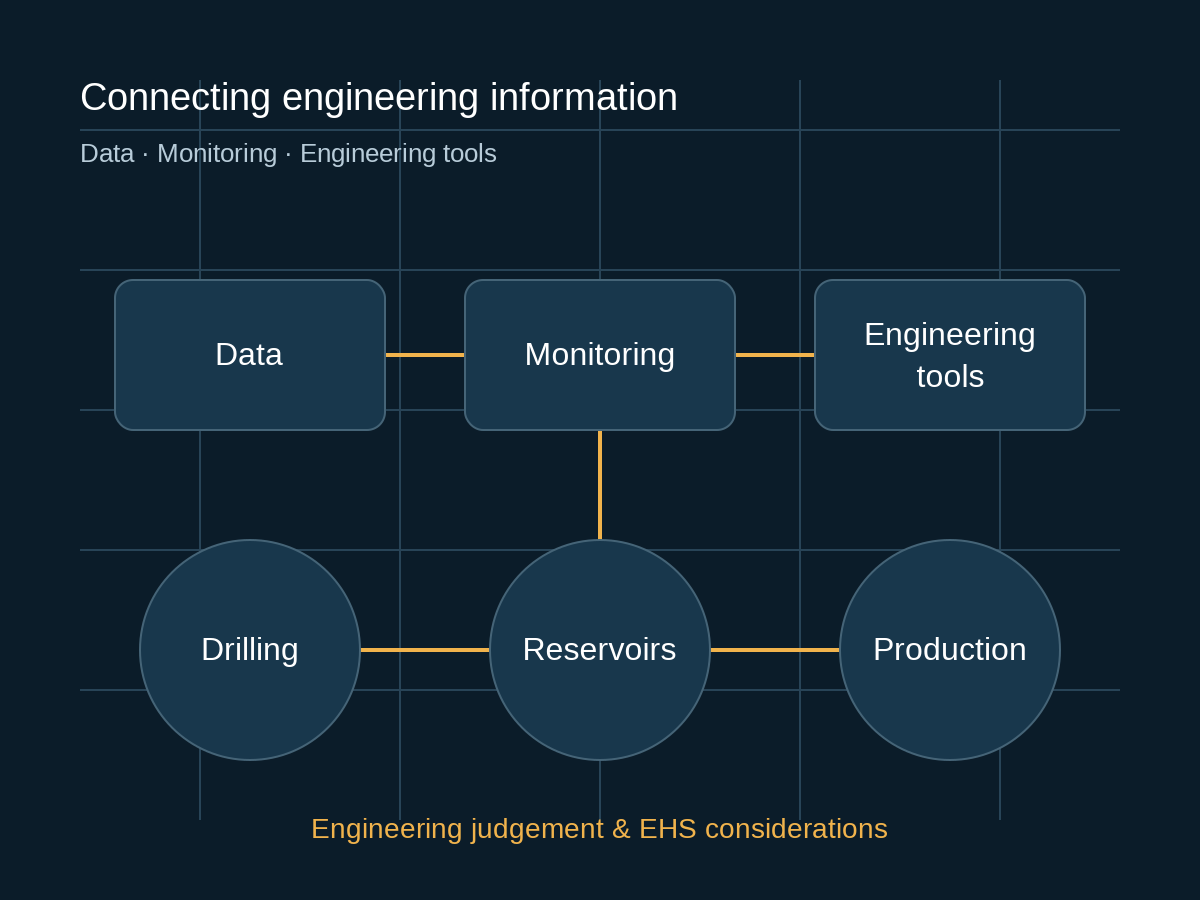
Drilling, reservoir and production teams use different views of the same operation. Shared data workflows and monitoring information help connect those views, while EHS requirements contribute to decisions about what information needs to be tracked and reviewed.
Scope of work
Technology evaluation, engineering data workflows and assessment of tools for operational needs.
Typical deliverables
Technology assessments, workflow recommendations and implementation requirements.
Project applications
Engineering analysis, operational monitoring and integration of petroleum systems.